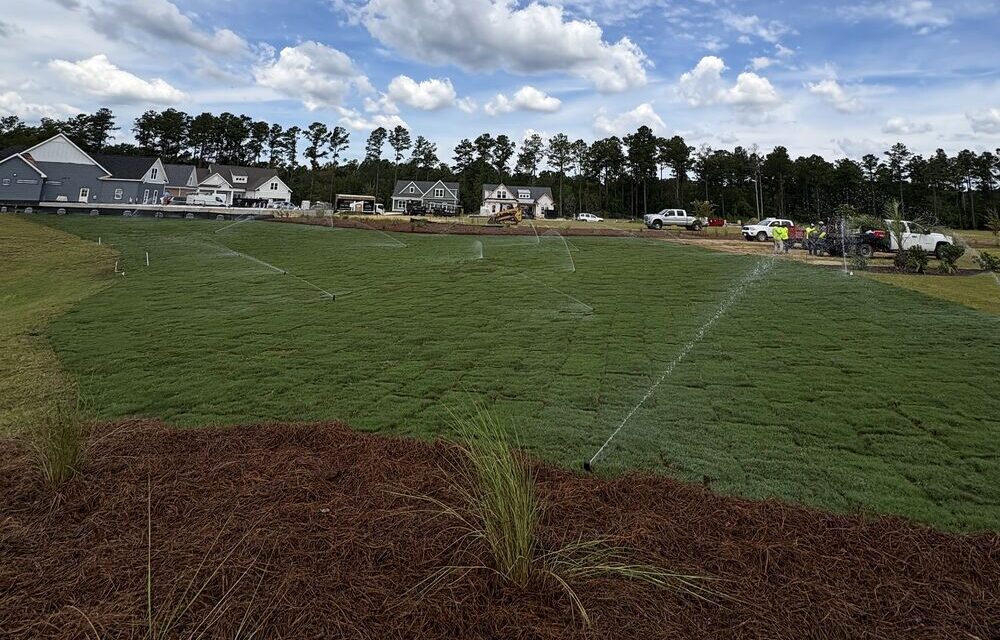
There are few things more satisfying than a brand-new sod lawn — and few things more frustrating than watching one turn brown three weeks later. After 15 years of installing sod and irrigation from Myrtle Beach to Wilmington, we can tell you that when new sod fails, it is almost never the grass. It is the water. This guide covers exactly how we keep new lawns alive on the Carolina coast, and how you can too.

Fresh sod arrives with roots only about an inch deep. Until those roots knit into your soil — which takes two to four weeks — the grass can only drink from a thin layer of earth that dries out fast. Now add coastal Carolina conditions: sandy soil that drains like a sieve, salt air, and summer heat indexes over 100. A new lawn here can go from lush to stressed in a single missed watering day. That is why sod and irrigation are two halves of the same job, and why we install them together whenever we can.
Here is the schedule we give every sod customer. Weeks one and two: water daily, sometimes twice daily in July and August heat, keeping the sod and the first inch of soil below it consistently moist — you should be able to lift a corner and see damp earth. Week three: cut back to every other day so roots start chasing water downward. Week four and beyond: two to three deeper waterings per week, about an inch of water total. Deeper, less frequent watering builds the deep roots that get a lawn through a Carolina summer.

A sprinkler system is not just heads in the ground — it is coverage math. Every head is placed for head-to-head coverage, meaning each sprinkler throws water all the way to its neighbors, so there are no dry crescents that show up as brown arcs in August. Zones are split by sun exposure and plant type: turf drinks differently than shrub beds, and a shaded side yard needs less than a full-sun front lawn. When we install a system, every zone is run, every head is adjusted, and the controller is programmed for the season before we leave the property.

Sandy soil is the defining fact of landscaping near the coast. It drains beautifully — which also means it holds almost no water in reserve. Inland watering advice of one deep soak a week simply does not transfer to a beach community in Ocean Isle or a new build outside Wilmington. In sand, we favor slightly shorter, more frequent cycles, and we often run cycle-and-soak programming: two short runs an hour apart so water absorbs instead of draining straight past the roots. It is the kind of local detail that decides whether a lawn thrives or limps.
Catch these early and the fix is usually simple. One: seams between sod rolls opening up or turning brown — the classic sign of under-watering. Two: bluish-gray patches that do not spring back when you step on them — drought stress hours from browning. Three: mushrooms or a sour smell — overwatering in poorly drained spots. Four: crisp brown arcs or corners — a coverage gap or a clogged, misaligned head. Five: sod you can still lift like a rug after three weeks — roots are not tacking down, usually a watering-depth problem. If you see any of these, adjust the same week; new sod rarely gives you a second month to figure it out.
Long enough to wet the sod and the first inch of soil beneath it — typically 15 to 30 minutes per zone depending on head type, twice a day during hot weather for the first two weeks. Then transition to fewer, deeper waterings.
Usually 14 to 21 days after installation, once the sod resists a gentle tug. Mow high on the first few cuts and never remove more than a third of the blade.
Hand-watering a small yard is possible if you are home twice a day, every day, for a month. For most lawns on the coast, an irrigation system is the difference between a lawn that establishes and one you replace. It also protects the investment long after establishment.
Warm-season grasses establish fastest in late spring through summer, but with working irrigation we successfully install sod almost year-round on the coast. Fall installs root in nicely with less watering pressure.
Yes — broken heads, dead zones, controller and valve problems, and leaks are everyday repairs for us, on systems of any age or brand.
Whether you need a brand-new lawn, an irrigation system that actually covers it, or a repair on a system that has seen better days, JP Landscapes handles it all across the Carolina coast, from Myrtle Beach to Wilmington. Call or text Jesse at 910-640-7660, or request a free quote — and see more of our work in the project gallery.