Landscapes age just like kitchens do. The shrubs that looked perfect in 2005 are now swallowing the windows, the beds have lost their edges, and the backyard is a space you cross rather than use. The good news: you do not need a new house to get a new yard. A landscape renovation — tearing out the old and rebuilding it up to date — is one of the highest-impact projects a homeowner can do, and it is some of our favorite work. Here is how we approach it, using a recent whole-yard renovation as the example.

Trim-and-tidy maintenance stops working when the bones are wrong. Signs you are past pruning and into renovation territory: shrubs cut back so many times they are woody shells, beds and lawn blending into each other with no defined edge, plants that outgrew their spot fighting the house itself, bare shade areas where grass gave up years ago, and a backyard with no destination — nowhere to sit, cook or gather. If three of those sound familiar, a renovation will do more than another season of trimming ever could.
Every renovation starts with editing. We remove overgrown and declining shrubs, grind or pull old roots, strip tired lawn where it cannot be saved, and haul it all away. This is also the moment to solve what is underneath: low spots get regraded, and if the yard has drainage trouble, pipes and basins go in now — before anything pretty goes on top. It is the step homeowners underestimate most, and the one that makes everything after it possible.
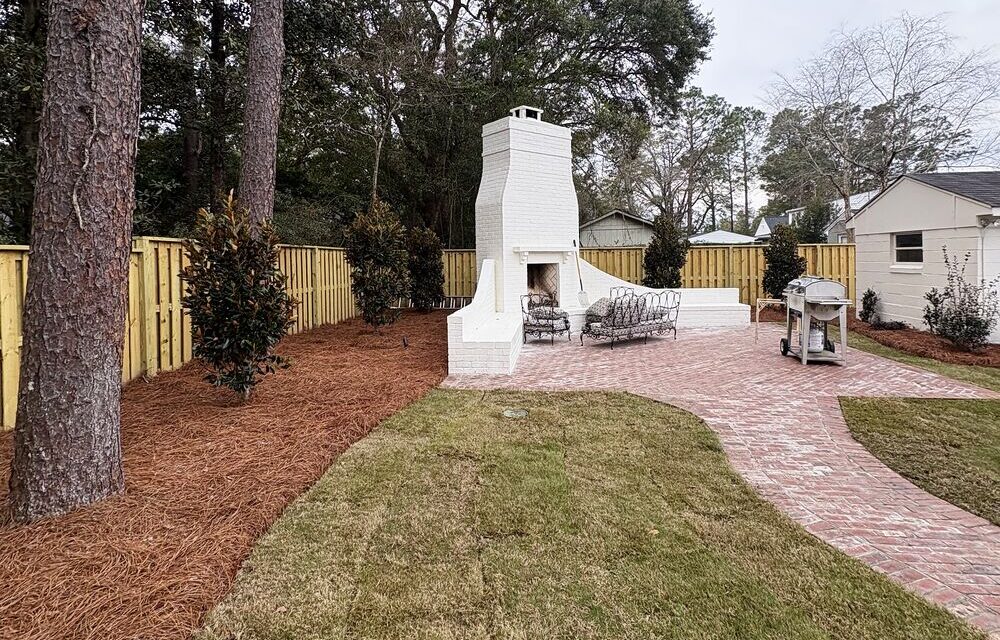
With the slate clean, we redraw the yard: sweeping bed lines instead of tight scallops, walkways that follow the way people actually move, and lawn shapes that are easy to mow and irrigate. On the project pictured here, a curved brick paver path became the spine of the backyard — connecting the house to a new patio and giving the whole space a sense of direction it never had.

Then the yard comes back better. Fresh planting beds sized for what plants become, not what they are in the nursery pot. Decorative rock beds where mulch used to wash out — river stone framing the foundation and entries stays put in coastal storms and looks crisp year-round. New sod goes down over renovated soil, and irrigation is adjusted or added so all of it is protected. The result reads instantly from the curb: defined edges, clean stone, healthy green.

The biggest shift in how people use their yards is the outdoor room. On the renovation featured above, a white masonry outdoor fireplace with a paver patio turned a forgotten back corner into the place the whole family migrates on fall evenings. Fire features, seating patios, and defined gathering spots do for a backyard what an island does for a kitchen — they give it a center. Paired with a renovated lawn and beds, they routinely turn an older yard into the best-looking one on the street.
It ranges widely with the size of the yard and what goes into it — tear-out volume, hardscape like patios and walkways, plant material, sod and irrigation. We scope it on-site and give a free written quote broken into phases if helpful.
Absolutely. A common sequence is tear-out, grading and drainage first; beds, stone and sod second; hardscape features like patios or a fireplace as a final phase. Staging spreads the budget without redoing work.
Most residential renovations run from a few days to two weeks on-site depending on scope. We give you a schedule with the quote and keep you posted as work progresses.
No. Most of the work happens outside — we confirm the plan up front, send updates, and walk the finished project with you.
Yes. Good renovations keep the healthy, well-placed plants and mature trees and build around them. You pay to fix what is wrong, not to replace what is right.
If your yard has good bones but a dated face, a renovation is the highest-return project you can do this year. JP Landscapes renovates landscapes across the Carolina coast — from Myrtle Beach to Wilmington — with one crew handling tear-out, grading, drainage, stone, pavers, sod and irrigation. Call or text Jesse at 910-640-7660 or request your free quote, and take a look at more finished projects to see what your yard could become.